Virtual CFO Services: How to Cut Costs and Grow Your Professional Service Firm
Created By :
Manan Bhatia
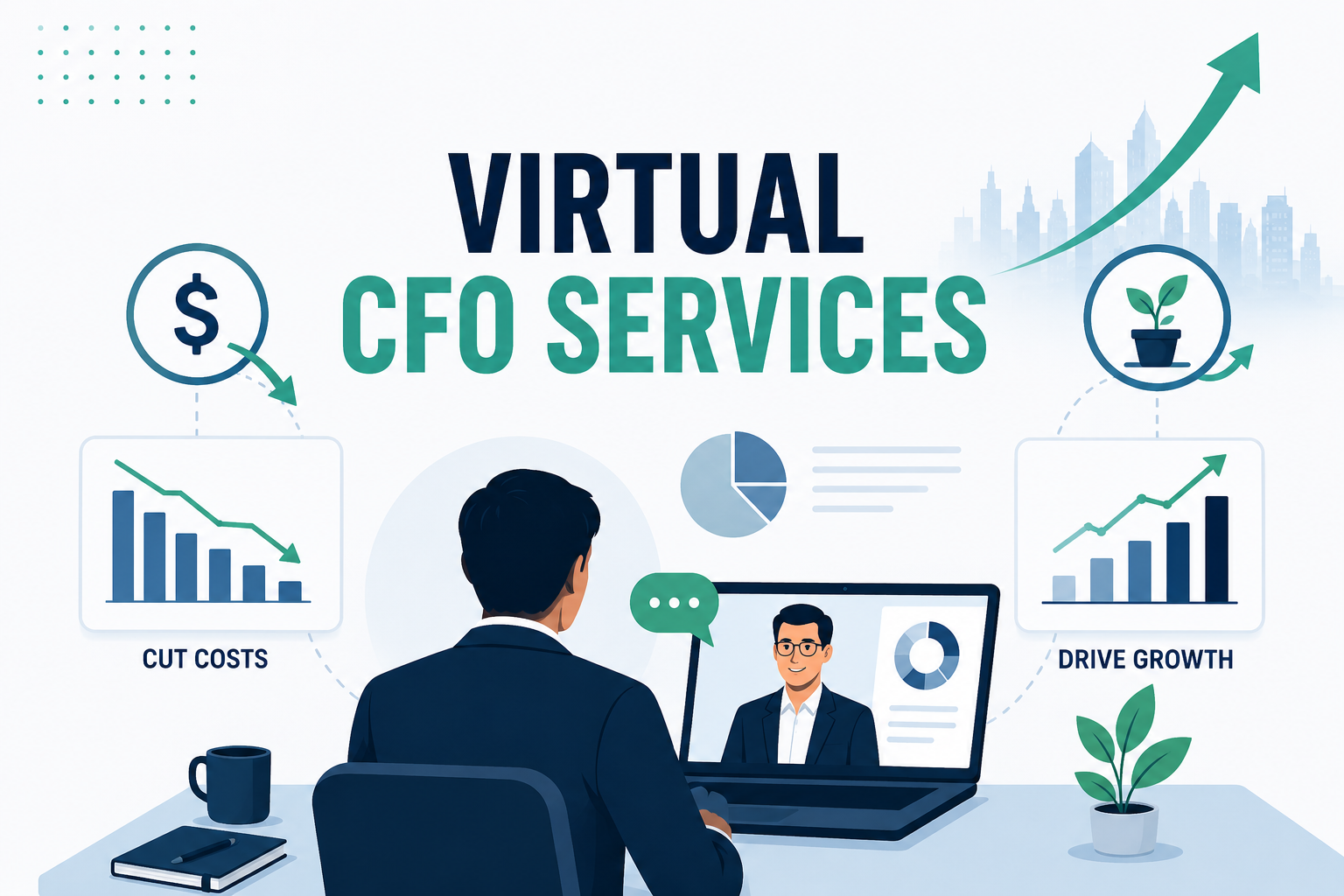
There is a consulting firm I came across a while back, around 35 people, billing well over Rs. 1.5 crore a month, that was somehow always short on cash by the 20th. The founder was genuinely baffled. Revenue was climbing, the team was busy, and clients were paying on time. On paper, everything looked fine.
Turns out one of their three service lines had margins so thin that every project they won was quietly making the overall business weaker. Nobody had caught it. The accountant was handling the books. The founder was running the firm. Nobody was sitting in between, actually looking at what the numbers were saying.
That gap, between recording transactions and genuinely understanding them, is where most professional service firms lose money. Slowly, quietly, sometimes for years.
Your Accountant Cannot Do This Job. That Is Not a Criticism.
Accountants are good at what they do: compliance, filings, tax, and year-end work. That is their job, and they do it well. But asking an accountant to tell you whether your pricing model is sustainable, or which client relationships are worth the margin they consume, is the wrong ask. It is simply not what they are built for.
A virtual CFO, the same thing as an outsourced CFO with just different names for the same role, is a senior finance person who works with your business part-time or on retainer. The job is not record-keeping. It is to build strategy. They look at the numbers and explain what they mean, flag what is going wrong before you notice it yourself and help you make better calls on the decisions that actually move the business.
Cash flow management, financial forecasting, figuring out which service lines deserve more investment and which ones you should probably shut down, that is the work. For most growing firms, having someone do that work consistently is what separates decent decision-making from genuinely good decision-making.
In-House CFO vs. Virtual CFO: The Honest Comparison
The numbers speak for themselves, but here is the full picture:
|
Factor
|
In-House CFO
|
Virtual CFO
|
|
Annual Cost*
(tentative cost considered for comparison purposes)
|
INR 40-80 Lakhs+ (salary + benefits)
|
INR 8-20 Lakhs (flexible retainer)
|
|
What You Get
|
One person, one background
|
A team with diverse industry experience
|
|
Flexibility
|
Fixed, hard to scale up or down
|
Adjusts as the business changes
|
|
Onboarding
|
3-6 months to get up to speed
|
2-4 weeks
|
|
Risk
|
Heavy key-person dependency
|
Built-in continuity across the team
|
The cost difference is significant, obviously. But the bigger point is that a virtual setup often gives you more capability than a single hire, not less. One person, however experienced, brings expertise from a specific background, whereas a team offers broader exposure across industries and business situations.
Where the Money Actually Gets Recovered
The thing that surprises most clients early in an engagement is not the strategic work. It is the cost audit.
When someone goes through your vendor contracts, your software subscriptions, your staffing structure, and your billing cycles properly – not a quick glance but a real examination – there is almost always money sitting there that nobody noticed was going out. Small amounts individually. Significant when you add them up across 18 months.
On top of that, proactive tax planning, which is different from the reactive version most firms default to, consistently saves money that would otherwise just go. Getting proper control over the working capital cycle, collections, payment terms, cash conversion, can change what a month-end looks like in ways that surprise people.
Most firms find a virtual CFO engagement pays for itself within the year. Some within a few months. That is not a pitch line. It is just what tends to happen when someone is actively looking at your finances rather than passively recording them.
Signs You Have Probably Waited Long Enough
Revenue looks healthy, but you cannot explain why profits are not following. Cash is tight, no matter how full the pipeline looks. You are about to take on debt, go after a major client, or have a conversation with an investor, and your financials are not in a state you would want anyone to scrutinise. Or you are making big calls on pricing, hiring, and expansion, mostly on instinct, because the data is either missing or not in a form you can actually use.
Any one of those is a reason to have the conversation.
What Separates the Good Providers from the Rest
Sector experience is more important than many providers acknowledge. Fields like professional services, law, consulting, and IT have unique financial patterns that a generalist background may not fully capture. These include long billing cycles, high staff costs relative to revenue, and unpredictable project income. You need someone who has experienced all of these challenges before.
The other thing worth evaluating is whether they are proactive. A strong CFO identifies issues before you have to ask about them and brings solutions to the table early. If every important conversation is being initiated by you, then you are likely not getting the strategic value you are paying for. At that point, you essentially have an expensive accountant with a different title.
How AKM Global Can Help
AKM Global works closely with professional service businesses, which means the conversations begin with understanding your actual business model rather than applying a generic framework designed for a completely different type of company.
We can assist with:
-
Financial strategy and planning
-
Cash flow management and forecasting
-
Cost optimisation and profitability analysis
-
Management reporting and MIS
-
Budgeting and growth planning
-
Investor readiness and funding support
-
Financial documentation and compliance oversight
The team is particularly experienced in supporting businesses preparing for funding rounds, investor discussions, or expansion phases, where strong financial clarity and documentation become critical.
Engagements are flexible by design, which matters more than it sounds. This becomes especially important during growth phases, where financial and operational requirements can change quickly.
Most firms realise the value of this structural financial oversight once they have had proper financial support for a few months. That is a perfectly fine way to learn it, but an expensive one.
If you have been considering whether the business would benefit from stronger financial visibility and strategic support, please feel free to reach out to us at info@akmglobal.in or submit our Enquiry form.